
Kempegowda International Airport
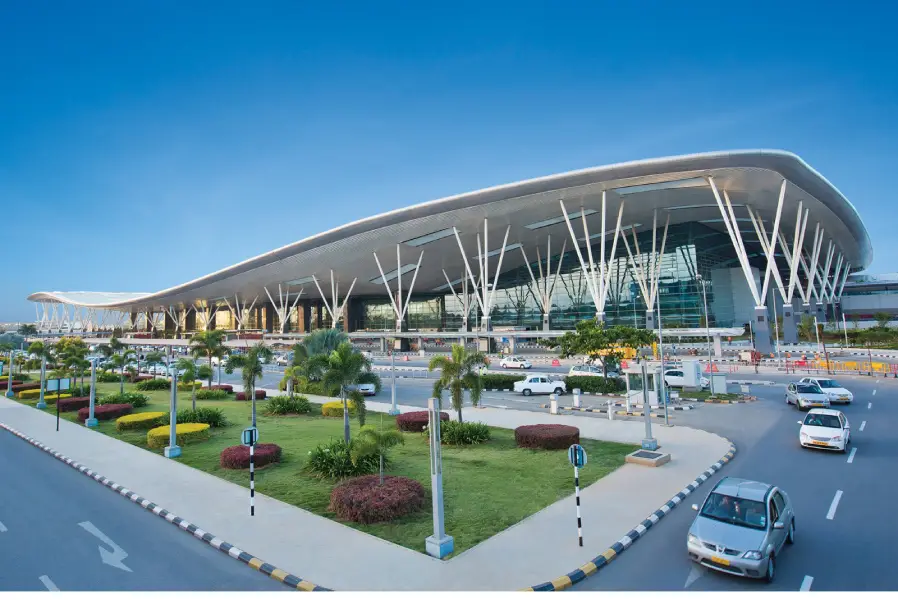
Kempegowda International Airport, also known as Bangalore International Airport, is a world-class facility that connects Karnataka’s bustling capital to destinations worldwide. Spanning 4,000 acres near Devanahalli, this sustainable airport stands as a global aviation hub and architectural marvel. Managed by Bengaluru International Airport Limited (BIAL), the airport was inaugurated in May 2008 to replace the HAL Airport, which could no longer meet the city’s growing aviation demands. Named after Kempe Gowda I, the founder of Bangalore, the airport is recognized as one of the best airports in India and is powered entirely by solar energy, making it one of the leading sustainable airports in India.
Connectivity between Kempegowda International Airport and Adarsh Lumina Apartments
Adarsh Lumina, a top residential project in East Bangalore’s Halanayakanahalli area, offers a luxurious and modern living experience. Spread across 8.7 acres, the project features five towers housing 440 premium apartments, including spacious 2.5 BHK and 3 BHK configurations. The apartments near Sarjapur Road are strategically located to benefit from seamless connectivity to Kempegowda International Airport via the Outer Ring Road (ORR) and NH 44. The travel time to Bangalore Airport typically ranges from 1.5 to 2 hours, with cabs and buses readily available for convenient access. Upcoming metro connectivity to Bangalore Airport will further enhance the commute, making Adarsh Lumina a prime choice for frequent travelers and professionals.
Why and How Kempegowda International Airport Came to Be
Bangalore, known globally as the “Silicon Valley of India,” required an international airport to support its booming technology sector, tourism, and business expansion. Recognized for its superior infrastructure, it was initially designed to handle 3.5 million passengers annually. It was later expanded to accommodate 12 million passengers, with state-of-the-art facilities such as additional taxiways, airplane stands, and a streamlined terminal.
The development of this airport involved a unique public-private partnership, with Bengaluru International Airport Limited overseeing the project. Stakeholders included Siemens, Zurich Airport, and Larsen & Toubro, who contributed significantly to the airport’s world-class design. Over time, GVK Power & Infrastructure acquired a majority stake in the airport, solidifying its position as a premier global aviation hub in India.
Facilities and Infrastructure at Bangalore International Airport
Bangalore International Airport is known for its modern infrastructure and passenger-friendly features, including:
- A four-story passenger terminal for both domestic and international flights.
- Efficient design with separate arrival and departure zones to streamline passenger flow.
- 53 check-in counters and 18 self-service kiosks for fast and convenient check-ins.
- 8 air bridges, 40 gates, and 9 remote bus stands for hassle-free boarding.
- A 4,900-meter-long runway that accommodates large aircraft, including the Airbus A380.
- Parking facilities for 2,000 vehicles, ensuring convenience for passengers.
- Parallel runways operational since 2019, allowing simultaneous landings and take-offs for enhanced efficiency.
With its solar-powered operations, it stands out as one of the leading sustainable airports in India.
Conclusion
Kempegowda International Airport symbolizes Bangalore’s global prominence in business and tourism. As one of the best airports in India, it offers world-class facilities, seamless travel experiences, and sustainable operations. Its proximity to premium residential projects like Adarsh Lumina reinforces its role in enhancing urban connectivity and luxury living. With planned metro expansions, excellent flight connectivity from Bangalore, and infrastructure that meets international standards, the airport continues to play a pivotal role in shaping Bangalore’s future as a global city.